

office@valbene.com


Lighting Solutions
The end of the bulb socket
as we see it:
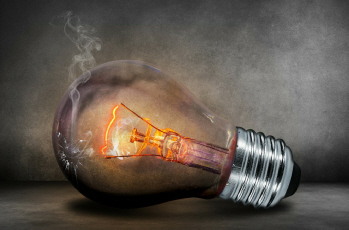
Thomas Alva Edison (USA 1847 to 1931) is considered the inventor of the light bulb. It was based on charred fibers of Phyllostachys Bambusoides, a tropical plant from Japan. The patent was filed in 1881.
Carl Freiherr Auer von Welsbach (Austria 1858 - 1929) experimented successfully with tungsten (melting point 3.695K) and with osmium (melting point 3.400K). By the way, he invented the mantle before, discovered rare earths such as neodymium and founded the Treibacher Industrie AG and Osram. The name Osram comes from the combination of the terms osmium and tungsten.
Alexander Lodygin (Russia 1857 - 1923) also realized that, tungsten had to be used because of high temperature required. He researched and sold in 1906 his patent for the light bulb with tungsten to General Electric.
The hotter, the higher the "efficiency" and the whiter is the light. Therefore, the filament must be thermally well insulated from the environment and socket.
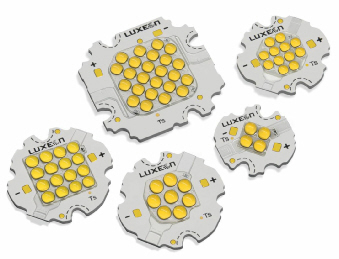
Exactly that is a hindrance for the LED. LEDs are semiconductors, at latest at 200 °C is the end.
The filament of the bulb is usually heated to 2,600K, in contrast to that, the LED must not exceed 473K. The cooler, the longer is the life span and the higher the light output. If you take a hot summer day with 40 °C, then for the passive cooling of the LED only 160 °C remains up to the maximum allowed, but the life is in this case already quite short.
Cooling, cooling, cooling - this is required for the LED's and therefore LEDs needs to be thermally perfect connected to a large area of heatsink.
That means, LEDs in incandescent lamp holders or as a retrofit for fluorescent tubes make no sense, even though they are sold in bulk. They will damage the reputation of the LED technology.
So far, no standardized lamp socket has yet emerged for the LED, but at the promised long life span you may also consider renewing the whole lamp together with the LED.
The lamp socket has therefore soon become obsolete, because for the LED is it obstructive, the bulb is prohibited and the energy-saving lamp has not been proven for various reasons. The classic gas discharge lamps will last for a while, they will even be developed a little further. If the manufacturing cost of the LED drops even more, you might concentrate on this sole technology then.